Introduction
The terms “sea bream” and “porgy” are often used interchangeably, leading to confusion among anglers and seafood lovers. While both belong to the Sparidae family, regional naming traditions and species differences matter. This guide untangles the terminology, explains key distinctions, and highlights what you need to know for fishing in Turkish waters.
Explore all bream speciesfound in our Sea Bream Species in Turkish Waters guide.
Taxonomy: Same Family, Different Names
- Scientific Family: All sea bream and porgy species belong to Sparidae, a family of marine fish with over 150 species.
- Regional Naming:
- Europe/Mediterranean: “Sea bream” is the preferred term (e.g., Gilt-head Sea Bream).
- U.S./Caribbean: “Porgy” is more common (e.g., Red Porgy or Scup).
- Key Insight: Many species have dual names depending on location. For example:
- Pagrus pagrus = Common Sea Bream (Europe) or Red Porgy (U.S.).
- Calamus calamus = Saucer-eye Porgy (U.S.) vs. Dentex (Mediterranean).
Species Comparison: Mediterranean vs. Atlantic
A. Mediterranean “Sea Bream” (Turkish Waters)
Gilt-head Sea Bream (Sparus aurata)
Key Trait: Golden stripe between eyes.
Habitat: Found in coastal waters, preferring seagrass beds, rocky bottoms, and estuaries in the Aegean and Mediterranean Seas.
Common Pandora (Pagellus erythrinus)
Key Trait: Pinkish body with a red spot near gills.
Habitat: Lives near sandy and rocky bottoms, typically at depths of 20-200 meters, common in the Aegean and Mediterranean Seas.
B. Atlantic “Porgy” (U.S. Waters)
Red Porgy (Pagrus pagrus)
Key Trait: Silvery-pink body, deeper water.
Habitat: Inhabits offshore reefs, rocky bottoms, and deep coastal waters, typically between 40-250 meters deep in the western Atlantic.
Scup (Stenotomus chrysops)
Key Trait: Small mouth, iridescent scales.
Habitat: Prefers sandy or rocky ocean floors in coastal waters, commonly found in estuaries and shallow reefs along the U.S. Atlantic coast.

Visual comparison of Gilt-head Sea Bream (Mediterranean) vs. Red Porgy (Atlantic).
Why the Confusion Exists
- Historical Trade: European settlers in the Americas called similar-looking fish “porgy,” while Mediterranean cultures retained “sea bream.”
- Culinary Overlap: Both groups are prized for their mild, flaky flesh, leading to marketing mix-ups.
- Species Overlap: Some fish, like Pagrus pagrus, are legitimately called both names depending on region.
How to Tell Them Apart
| Feature | Sea Bream (Mediterranean) | Porgy (Atlantic) |
|---|---|---|
| Body Shape | Oval, compressed | Deeper, rounder body |
| Coloration | Gold, silver, or pink hues | Reddish-pink or bronze |
| Habitat | Rocky reefs, seagrass | Sandy bottoms, estuaries |
| Mouth Size | Small to medium | Very small (e.g., Scup) |
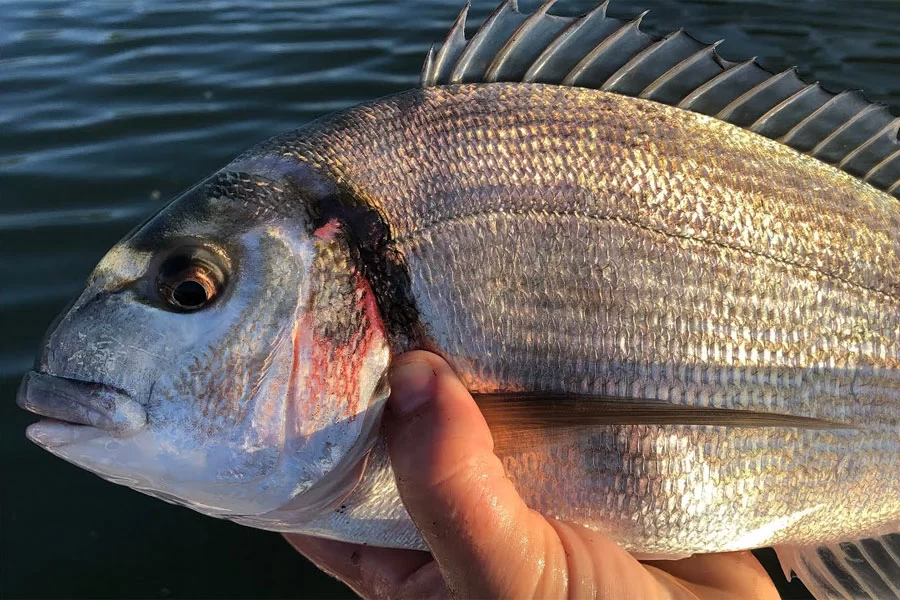
Pro Tip: Look for the golden stripe – unique to Gilt-head Sea Bream (Sparus aurata).
Fishing Implications
- Turkey: Target “sea bream” like Sparus aurata with light spinning gear near reefs.
- U.S. East Coast: Use bottom rigs for “porgy” like Stenotomus chrysops in sandy areas.
- Bait Differences:
- Mediterranean: Shrimp, squid.
- Atlantic: Clams, sandworms.
Refine your bait strategy with Best Baits and Lures for Sea Bream Fishing.
Culinary and Market Differences
- Mediterranean Sea Bream: Often sold whole in markets; grilled with olive oil and herbs.
- Atlantic Porgy: Commonly filleted; popular in Caribbean stews and fried dishes.
- Fun Fact: In Japan, Pagrus major (Red Seabream) is called “Tai” and is a sushi delicacy.
Frequently Asked Questions
Are sea bream and porgy the same fish?
They’re in the same family (Sparidae) but different species. Regional names cause confusion.
Which tastes better: sea bream or porgy?
Both are delicious! Gilt-head is prized for its firm texture, while Red Porgy is sweeter.
Can I catch porgy in Turkish waters?
No—true “porgy” species like Scup are Atlantic. Turkey has sea bream like Pagellus or Diplodus.
Conclusion
Whether you call them sea bream or porgy, these Sparidae family members offer exciting fishing and culinary rewards. In Turkey, focus on iconic species like the Gilt-head, and leave the “porgy” label to Atlantic anglers. For more tips, explore our Ultimate Guide to Sea Bream Fishing!