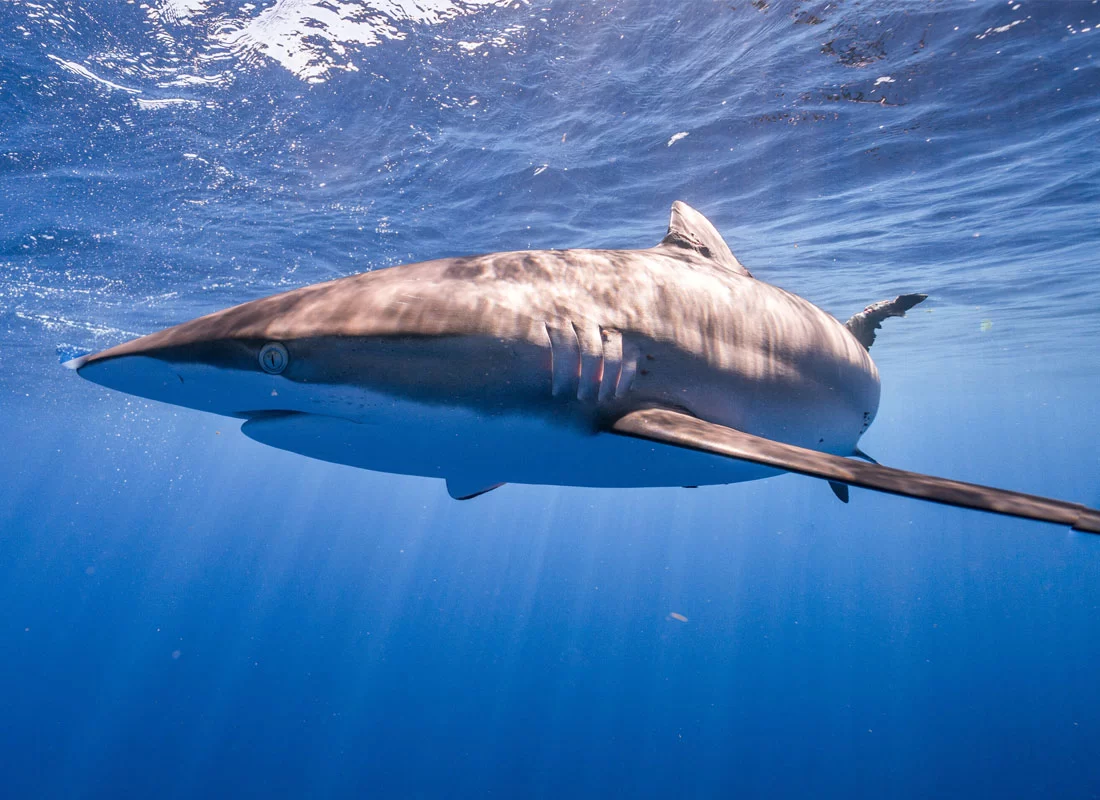
Common Names
English: Silky Shark
Turkish: İpeksi Köpekbalığı
Size
Average Size: 200-250 cm
Maximum Size: Up to 350 cm
Scientific Classification
Kingdom: Animalia
Phylum: Chordata
Class: Chondrichthyes
Subclass: Elasmobranchii
Order: Carcharhiniformes
Family: Carcharhinidae
Genus: Carcharhinus
Species: Carcharhinus falciformis





Appearance
Streamlined, slender body with a long, rounded snout.
Dark gray to brownish-gray dorsally, and white ventrally.
First dorsal fin is moderately tall and falciform (sickle-shaped).
Pectoral fins are long and narrow.
Distinguishing Features: The silky texture of its skin, and the shape of its first dorsal fin.

Conservation Status:
Vulnerable (VU)
Silky sharks (Carcharhinus falciformis), the second-most harvested shark species globally, are facing alarming population declines due to overfishing and bycatch. In the Atlantic Ocean, they are particularly vulnerable, managed as a single stock by the International Commission for the Conservation of Atlantic Tunas (ICCAT). Genetic studies suggest isolated populations and female site fidelity to birthing areas, highlighting the need for targeted conservation efforts.
Without effective management, smaller populations risk extinction. Integrated research on their movements, genetic structure, and reproductive habits is critical to understanding their connectivity across U.S. waters, The Bahamas, and the Caribbean. Identifying key aggregation sites like pupping grounds is essential for developing effective conservation strategies.
Silky sharks inhabit tropical waters worldwide, often aggregating near Fish Aggregating Devices (FADs), which makes them highly susceptible to purse seine and pelagic longline fisheries. They account for 90% of shark bycatch in FAD-related fisheries, with nearly 100,000 FADs deployed annually. Such fishing pressure has led to population reductions of up to 95–98% over three generations.
Listed as “Vulnerable” by IUCN Red List and under CITES Appendix II since 2016, their survival depends on immediate action to regulate fishing practices and protect critical habitats. Spatial protections combined with stricter fisheries regulations are vital to reversing these trends and ensuring the species’ long-term sustainability.
Regulations and Ban
Due to its vulnerable status, there are regulations regarding its capture. You should not target them, fishing for silky sharks is strictly prohibited in Türkiye. Bycatch is a significant threat. Check the most current Turkish fisheries regulations for specific details.
Recreational Fishing
Rarely encountered by recreational anglers due to its preference for deep, open waters.
If caught accidentally, it should be released immediately and with minimal harm.
It is crucial to be aware of and respect the protected status of this species.
Safety: Like all large sharks, silky sharks should be treated with extreme caution.
Is Silky Shark a Game Fish?
Yes, but not typically targeted due to its oceanic habitat and vulnerable status.
Habitat and Distribution
Primarily an oceanic shark, found in deep, open waters.
Occurs in tropical and subtropical seas.
Distribution: Mediterranean coast line of Türkiye, thought less common in northern areas like the Aegean sea.
It’s presence in Turkish waters is possible, especially in the southern regions.
Ecological Role
Apex predator in open ocean ecosystems.
Diet: Primarily feeds on bony fishes, squid, and other cephalopods.
Quick Facts
| Common Names (English) | Common Names (Turkish) | Size | Habitat | Conservation Status |
|---|---|---|---|---|
| Silky Shark | İpeksi Köpekbalığı | 200-350 cm | Open Ocean | Vulnerable (VU) |