Common Names
English: Spiny Butterfly Ray, Giant Butterfly Ray
Turkish: Kazıkkuyruk, Dikenli Kelebek Vatozu
Size
Average Size: Disc width of 180-240 cm
Maximum Size: Up to 400 cm
Scientific Classification
Kingdom: Animalia
Phylum: Chordata
Class: Chondrichthyes
Subclass: Elasmobranchii
Order: Myliobatiformes
Family: Gymnuridae
Genus: Gymnura
Species: Gymnura altavela
Appearance
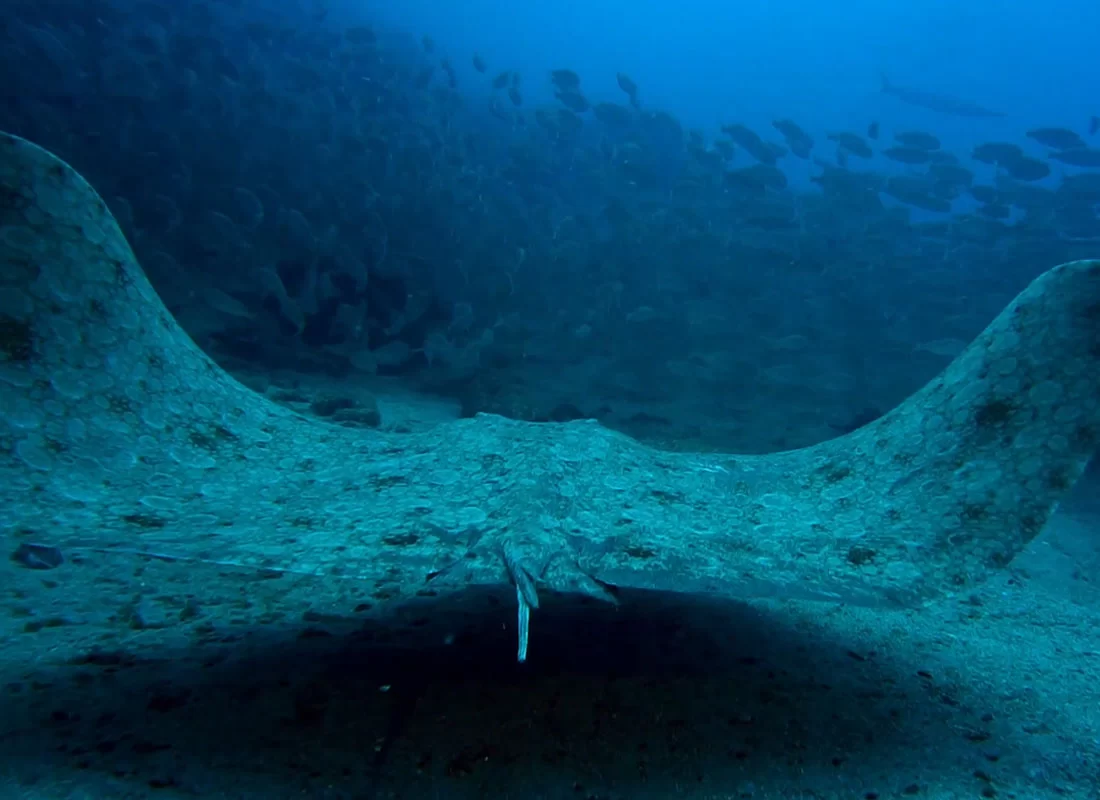
Very wide, diamond-shaped body, much wider than it is long.
Short tail, much shorter than the body width.
Coloration is typically brown, gray, or olive above, with a lighter underside.
Distinguishing Features: Extremely wide body, short tail, and a venomous tail spine.
Danger: Has a venomous spine on its tail.
Conservation Status:
Critically Endangered (CE)
Critically Endangered (CE) due to its limited distribution and threats to its habitat.
The Spiny Butterfly Ray (Gymnura altavela) is a distinctive inhabitant of shallow Atlantic waters, easily identified by its broad, diamond-shaped body and characteristic tail spine. This species has faced severe population declines due to overfishing and habitat pressures. In 2016, it was assessed as Critically Endangered on the IUCN Red List of Threatened Species, highlighting its urgent conservation status. Notably, in Türkiye, this ray is strictly protected—fishing for this species is absolutely forbidden under national regulations.
Found across the Atlantic from the Americas to West Africa, including the Mediterranean, Aegean and Black Seas, the Spiny Butterfly Ray prefers sandy or muddy seabeds in coastal zones. Despite its wide historical range, populations have become increasingly fragmented, with some areas reporting near-total disappearances.
Conservation efforts are critical to prevent the extinction of this remarkable species. While international protections exist, local compliance, especially in key habitats is essential. In Türkiye, where the species is legally shielded, public awareness and strict enforcement can help preserve remaining populations. As a protected and endangered species, the Gymnura altavela serves as a reminder of the fragility of marine ecosystems and the urgent need for sustainable fishing practices.
Regulations and Ban
Strictly protected species. Fishing for or targeting this species is completely prohibited.
Heavy penalties apply to those who violate this protection.
Check the most current Turkish marine fisheries regulations for specific details.
Recreational Fishing
Not a target species for recreational fishing.
Any accidental catches must be released immediately and with minimal harm.
It is crucial to be aware of and respect the protected status of this species.
Warning: The tail spine is venomous and can cause severe pain. Handle with extreme caution, and avoid the tail area.
Safety: Exercise extreme caution if encountered, and avoid handling.
Is Butterfly Ray a Game Fish?
No.
Due to its critically endangered status, it must not be targeted.
Habitat and Distribution
Patchy and discontinuous distribution in Atlantic tropical and warm-temperate waters.
Found in shallow brackish and coastal waters over soft sandy or muddy substrates, at depths of 5–100 m.
Distribution: Mediterranean Sea, Aegean Sea, and Black Sea coasts of Türkiye.
Ecological Role
Benthic feeder, preying on bottom-dwelling invertebrates and small fish.
Diet: Crustaceans, mollusks, worms, and small fish.
Quick Facts
| Common Names (English) | Common Names (Turkish) | Size | Habitat | Conservation Status |
|---|---|---|---|---|
| Spiny Butterfly Ray, Giant Butterfly Ray | Kazıkkuyruk, Dikenli Kelebek Vatozu | Up to 400 cm disc width | Shallow coastal waters | Critically Endangered (CE) |