Common Names
English: Marbled Spinefoot, Rivulated Rabbitfish
Turkish: Sokar balığı, Sokan
Size
Average Size: 10-20 cm
Maximum Size: Up to 30 cm
Scientific Classification
Kingdom: Animalia
Phylum: Chordata
Class: Actinopterygii
Order: Perciformes
Family: Siganidae
Genus: Siganus
Species: Siganus rivulatus
Marbled Spinefoot Appearance
Body is covered in small embedded scales, except for the midline of the underside. Color is variable, usually showing dark spots and yellow wavy lines along the sides, creating a marbled-like pattern. Upper body tends to be grey-green to brown with a yellow abdomen or silvery white underside.
Distinguishing Features: Marbled pattern on the body, venomous spines in the fins.
Danger: Venomous spines can cause a very painful wound if handled incorrectly.
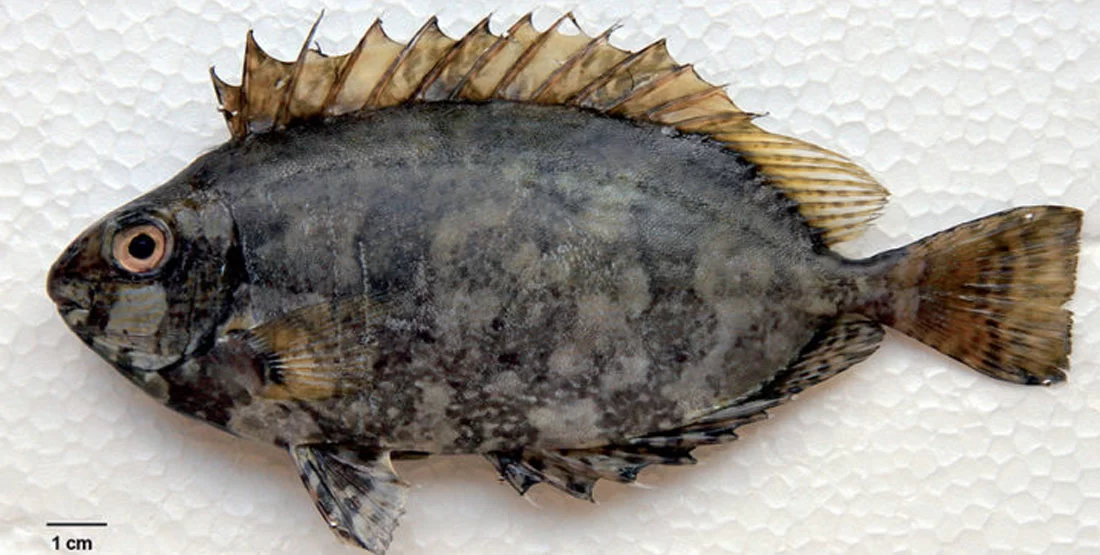
Siganus rivulatus, commonly known as the marbled spinefoot, rivulated rabbitfish, or surf parrotfish, is a highly social, herbivorous fish belonging to the family Siganidae. Native to the western Indian Ocean and the Red Sea, it has expanded its range into the Mediterranean through Lessepsian migration via the Suez Canal. This species holds taxonomic significance as the type species of the genus Siganus and the monogeneric family Siganidae.
Conservation Status:
The Marbled Spinefoot has a laterally compressed body, typically reaching 10–20 cm in length, though some individuals grow up to 30 cm. Its dorsal and anal fins contain venomous spines capable of delivering painful stings, though fatalities are unreported. The venom, a heat-sensitive protein, can be neutralized by immersing the wound in hot water (43–46°C).
The fish exhibits variable coloration, often displaying dark spots and wavy yellow lines against a grey-green or brown upper body, with a silvery-white underside. Primarily herbivorous, it feeds on algae such as Polysiphonia and Sphacelaria, though it may also consume jellyfish and ctenophores seasonally.
Regulations and Ban
Due to its invasivity and abundance, it is not a banned species in Türkiye. Fishing is open all year round without any specific regulations, but remember that 5 kg per person rule still apply.
Ecological Role
Herbivorous, grazing on algal communities. Together with the related Dusky Spinefoot (Siganus luridus), it has been implicated in the creation of “barrens” off the coast of Türkiye by overgrazing algal communities, reducing complexity, biomass, and biodiversity.
Diet: Algae.
Is Rabbitfish a Game Fish?
No.
But Rabitfish often becomes a target for avid fishermen.
Recreational Fishing
Actively targeted by recreational fishermen in Türkiye.
Habitat and Distribution
Found in shallow brackish and coastal waters over soft sandy or muddy substrates, at a depth of 2–40 m.
Distribution: Mediterranean Sea, Southern Aegean Sea coasts of Türkiye.
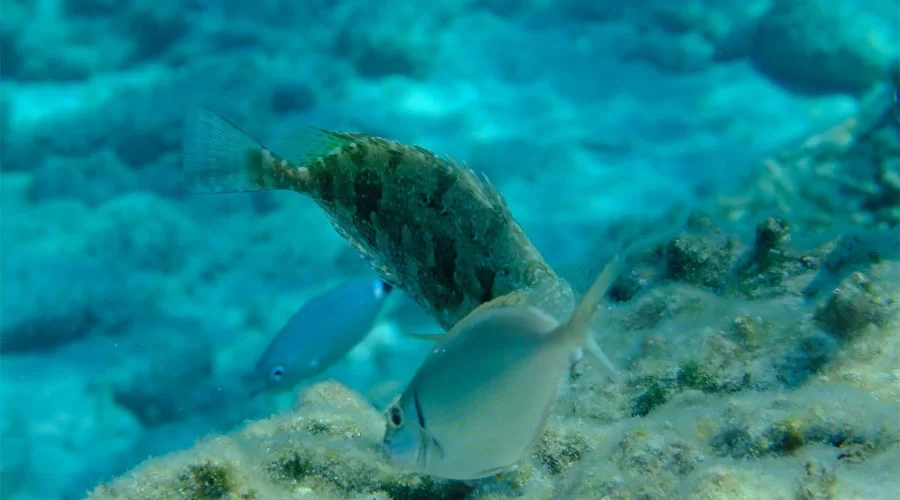
Siganus rivulatus has become an ecological concern in the Mediterranean and Aegean, where its invasive spread disrupts native ecosystems. Unlike in its native range, its aggressive herbivory damages vital seagrass beds, particularly Posidonia oceanica, a key species for marine biodiversity.
This overgrazing threatens coastal habitats, destabilizes sediments, and outcompetes native herbivorous fish, making it a significant invasive threat that requires monitoring and management.
Best Time to Fish
| Month | Fishing Quality |
|---|---|
| January | Fair |
| February | Good |
| March | Good |
| April | Good |
| May | Great |
| June | Great |
| July | Great |
| August | Great |
| September | Great |
| October | Good |
| November | Fair |
| December | Fair |
Best Time of Day: Throughout daylight hours.
Water Temperature Considerations: More active in warmer months.
Quick Facts
| Common Names (English) | Common Names (Turkish) | Size | Habitat | Conservation Status |
|---|---|---|---|---|
| Marbled Spinefoot, Rivulated Rabbitfish | Sokar balığı, Sokan | 10-30 cm | Shallow coastal waters | Least Concern (LC) |